

HIV in a new era - new report on changing care needs, costs and co-morbidities
Today, May 28, Hiv-Sweden publishes the report "HIV in a new era". The report is released in connection with the webinar "Are we ready? Comorbidities, health economics and the future needs of people living with HIV" and aims to highlight aspects of the changing care needs of people living with HIV and the new cost structure that is taking shape as a result.
The report's foreword reads:
"Healthcare is a high priority issue in Sweden. Accessibility, waiting times and costs are aspects that often appear in the debate about the health care system. For people living with HIV, well-functioning care is a prerequisite for good health and a good life. At the same time, several trends can be discerned in the 40-year history of HIV, from palliative care to the current designation of HIV as a chronic, treatable disease. With the changing care needs of people living with HIV, we are in the midst of an ongoing paradigm shift with demands to adapt care and resource allocation. Of the principles of the Health Care Act (1982:763), debates and discussions on HIV care include arguments that lean towards the principle of human dignity as well as the principles of need and solidarity. There is now a relatively rich body of material describing the consequences of an HIV diagnosis for the individual. The authorities as well as academia and civil society have published reports on the life situation of people living with HIV, and the needs and challenges that patients face with their diagnosis. However, the principle of cost-effectiveness seems to be rarely touched upon. To avoid co-morbidity, increasing costs and improving the quality of life of people living with HIV, cost-effectiveness should be given more attention.
A reasonable question is whether we in civil society should highlight cost-effectiveness ourselves. Is it to be true to our target groups and our function in relation to other actors?
We lean towards a yes, by highlighting challenges and which interventions have an effect, we can point out what makes a difference and contributes to better health and quality of life. The fact that healthcare costs and must cost is reasonable given our economic prosperity, but we need to ask ourselves whether resources for the interventions that exist today can be used in other ways. Ultimately, this is what also affects the health and quality of life of people living with HIV.
This report therefore aims to answer these questions:
What is the cost of co-morbidity in people living with HIV? How can we better prevent, detect and treat co-morbidities?
The report is based on a literature review of studies in the area of health care costs for people living with HIV, with a focus on Sweden and Denmark. The choice of Nordic countries is based on the design of health systems, HIV prevalence, demographic composition and health of the population, and available published research. Some references are also made to research from other countries."
Download the report here
Now is the time to become a member of HIV-Sweden!
Your voice is needed
You represent several important key groups in HIV prevention, your voice is needed for our joint work. With collective power and a common voice, we can push issues further.
By being a member of HIV-Sweden, you are part of the national and international policy and advocacy work that HIV-Sweden carries out. Our work ensures that human rights, the right to good health, the right to a life free from prejudice and discrimination, apply to everyone living with HIV.
Your membership and commitment has enabled us to continue working to improve the rights of people living with and affected by HIV in Sweden.
Renew your membership for 2024 so we can continue to make a difference together.
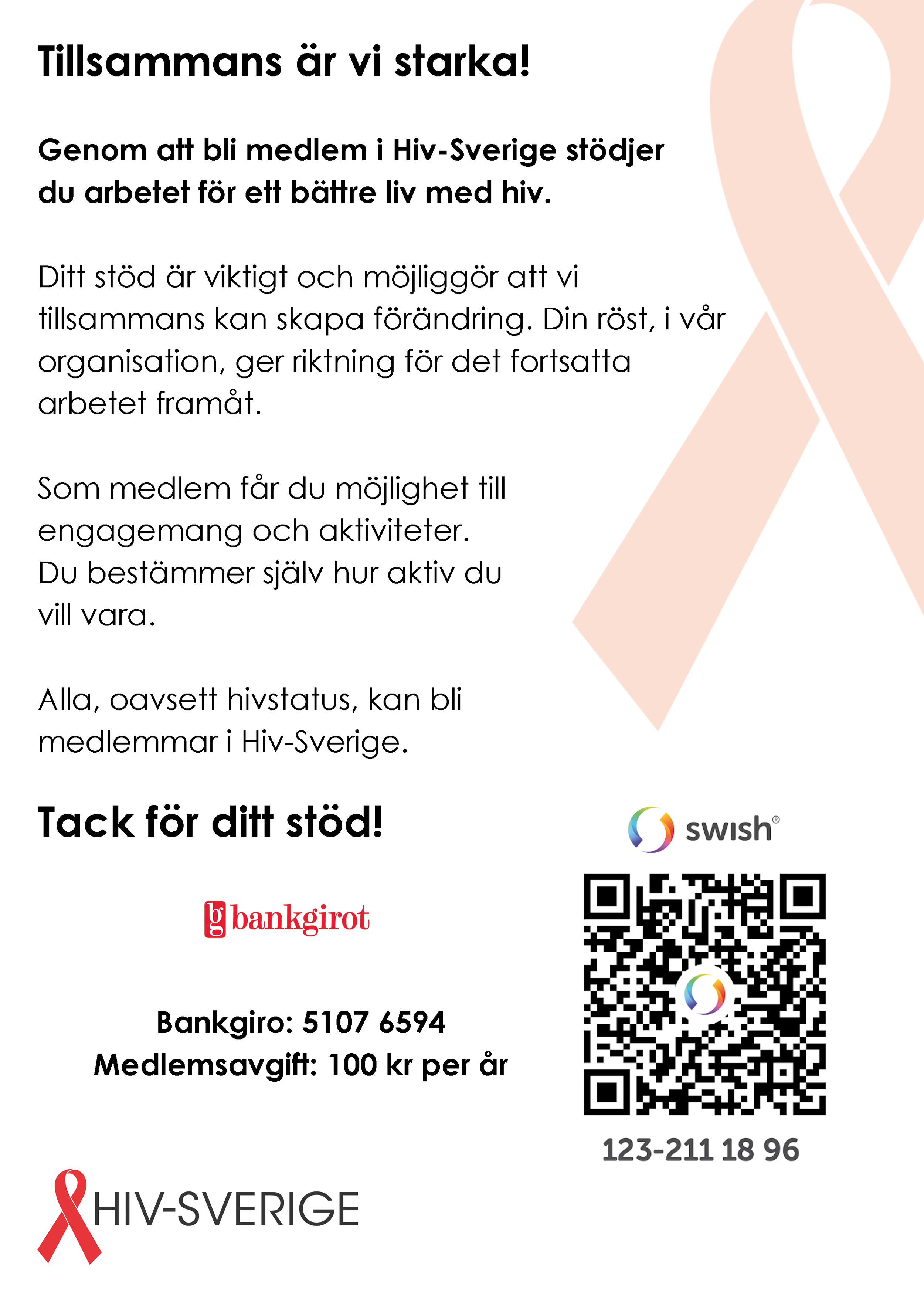
Membership fees 2024
We hope that you will continue to be part of HIV-Sweden. Membership fees run per calendar year. New members who pay the fee from October onwards are considered to have paid the fee for the entire following year.
To be entitled to participate and vote at the annual meeting, you must have paid the membership fee. The membership fee for the year 2024 is 100 SEK for individual members, persons registered at the same address as a member (family member) 50 SEK/year/person, 1000 SEK for member legal entity and 1500 SEK for member association.
When paying, do not forget to write your name and contact details.
BG 5107-6594
Swish 1232111896

We look forward to working with you.
//Simon, Anna and Emanuel
News from CROI 2024: Cardiovascular disease risk higher than previously feared, 'weekly pills' and promising approaches to managing high blood pressure
CROI, or Conference on Retroviruses and Opportunistic Infections, is a conference and forum focusing on retroviruses and viral diseases. During this year's conference, which took place in Denver, Colorado between March 3 and 6, several news stories about HIV emerged. HIV-Sweden monitored the event and has compiled three of the most talked about news from the conference.
One pill a week could soon become a reality
Treatment for HIV in the form of tablets has been the most common approach since the breakthrough of antiretroviral treatment for HIV in the mid-1990s. For most people living with HIV today, treatment involves taking either one or two tablets a day. For a few years now, treatment has also been available in the form of monthly injections called Cabenuva. The injections are given in hospital and need to be taken at regular intervals within a window of about two weeks. Tablets with a longer duration of action are also now available, which could mean that tablets only need to be taken once a week.
In a presentation at CROI, Professor Russ Carstens from the pharmaceutical company Merck presented new data from two studies with the preparation MK-8725, a new drug that is one of the first in its category, nucleoside reverse transcriptase translocation inhibitor.
In the first study, 37 people living with HIV were tested with MK-8725. The participants were divided into five groups and given different doses, from 0.25mg to 10mg. Researchers then examined how well the drug worked against the HIV virus and concluded that doses above 5mg were sufficient to effectively treat HIV. In a subsequent study, 32 people not living with HIV tested MK-8725 for three weeks. The group was divided into four smaller groups and given doses ranging from 5mg to 40mg once a week. At the end of the study, the researchers found that the drug would remain in the body between 216 and 291 hours, without a new dose. The results showed that taking one pill of MK-8725 a week would be enough to treat HIV.
News about another drug, GS-1720, was also shared at CROI. Dr. Carl Fichtenbaum from the University of Cincinnati reported on a study done with GS-1720, a drug in the integrase inhibitor class. The study tested doses of 30mg up to 900mg of GS-1720 among people living with HIV. The researchers concluded that a dose of 450mg effectively treated HIV and remained in the body at a sufficient dose for almost 10 days. No serious side effects were reported and the drug was generally well tolerated by the participants.
There are also other studies and attempts to develop a treatment involving only one or two tablets per week. Dr. Amy Colson from the Community Initiative Resource in Boston reported on a study with the drugs Lenacapavir and Islatravir that is showing good results and could pave the way for a weekly combination.
Risk of cardiovascular disease higher than previously feared - new guidelines in both UK and US
Several studies have confirmed that people living with HIV are affected by co-morbidities to a greater extent and at an earlier age. In general, it is estimated that common diseases such as diabetes and cardiovascular disease affect people living with HIV about 5 to 10 years earlier than the general population.
New data from a study called REPRIEVE shows that the risk of cardiovascular disease may be higher than previously thought. The study included 7 769 people with HIV aged 40 to 75 years, from five continents. The vast majority of study participants had a low or moderate risk of cardiovascular disease at screening. By following the participants, the researchers have discovered that more of the study participants suffered from cardiovascular disease than the research team initially expected. In particular, the risk appears to be higher in high-income countries. The study also shows that women have a two and a half times higher risk of cardiovascular disease than previously estimated.
Several countries have recently changed their guidelines, recommending that people living with HIV take blood thinners to prevent cardiovascular disease. In November 2023, the British HIV Association updated its recommendations for all people over the age of 40 to be offered blood thinners. In the US, the Department of Health and Human Services issued new recommendations in February 2024 that are broadly similar to the UK guidelines. In terms of the type of blood thinners recommended, Pitavastatin is by far the most commonly recommended.
For more information on REPRIEVE:
https://www.reprievetrial.org/
Promising method gives good results for managing high blood pressure
High blood pressure is one of the underlying causes of heart attacks and strokes, two conditions that can have major consequences for those affected. There are a number of ways to lower blood pressure, and thus reduce the risk of heart attack and stroke. Methods that have proved successful include increased physical activity, reduced salt intake, smoking cessation and reduced alcohol consumption. It is also possible to take antihypertensive medication.
A study from the US recruited 297 people with HIV and high blood pressure. Half of the participants followed their usual care plan with routine visits and tests. The other half took part in a specially designed program aimed at lowering the participants' blood pressure. The program consisted of home blood pressure measurement, evidence-based treatment algorithms, digital journal tools, and a nurse who coordinated and communicated with the patient. Participants in both groups were followed for 12 months and then evaluated. In the group with a specially designed program, more people received some type of treatment for high blood pressure and three times as many reached the goal of a blood pressure of 130/80, compared to the group that followed their regular care plan.
In addition to lower blood pressure, the program was found to lead to lower bad cholesterol as well as other health benefits.
For more information on the study:
https://jamanetwork.com/journals/jamanetworkopen/fullarticle/2815688
Several of the news items highlight that more needs to be done to develop care for people living with HIV in Sweden. There is also a need for updated guidelines and interventions to better monitor the health of people living with HIV. The health challenges of today and the future will be different, and it is important that the healthcare system has the knowledge and resources to deal with this. HIV-Sweden is constantly working to help ensure that healthcare develops in harmony with the needs of people living with HIV. Do you have questions or concerns about any of this news or the care you receive today? Please contact us!

Few health education programs include the perspective of living with HIV
Up-to-date knowledge about HIV among health care professionals is a prerequisite for good treatment and more patient-safe care. As the number of people living with HIV grows older, contact between people living with HIV and health and social care professionals in elderly care is expected to increase.
Healthcare education and training, both at vocational and university level, are hubs where knowledge is transmitted. Education and training providers can use curricula and other tools to guide content and ensure that students are prepared for future working life, both in terms of interpersonal skills and providing adequate care to users and patients.
To create a picture of how healthcare education prepares future healthcare and elderly care professionals to care for and respond to people living with HIV, HIV-Sweden has interviewed education managers, teachers and former students in healthcare education in Sweden.
In addition to creating a better understanding of how and to what extent HIV is talked about in the country's health education programs, the purpose of the survey is to understand how we can improve the knowledge of students, institutions and health professionals in the future.
How did the survey work?
The survey was carried out using a mixed methodology involving interviews with education managers, teachers and former students. In order to distinguish differences in educational level (university - vocational program), the survey was conducted in groups of both levels.
A survey of potential respondents was conducted in early fall 2023 and resulted in a list of contact details. To create a representative sample, data was collected from nursing schools across the country. A questionnaire for mailing and telephone interviews was developed internally using literature and knowledge gathered during the process of establishing a contact list.
Total contacted:
5 universities with nursing programs through calls to study and career counselors, administration of nursing programs and program managers.
12 health care teachers in different vocational education programs
7 teachers in health care colleges
13 former students in health education
Of the five universities, three responded to our request. Two universities could not respond because there was no person in charge.
The response rate has been lower for nursing teachers in vocational programs and teachers in health care colleges; only two were able or willing to respond.
Result
University 1
The person responsible for semesters 1 and 5 reports that they include information on viruses and their structure during semester 1 in the course "clinical microbiology". During semester 5, they try to have a digital lecture on HIV. The person responsible informs that they unfortunately cannot share the digital lectures and they do not remember how HIV is mentioned in the teaching materials. He also states that they unfortunately do not have any updated literature on HIV but that they will try to review this by 2024.
University 1
The person in charge of semester 4 informs us that under ethics and morals they address HIV. They have an interactive digital lecture with updated information about HIV. HIV-Sweden was offered to be involved the next time they update the information film.
University 3
Informs that they briefly touch on HIV during microbiology, but admits that they could have covered more about HIV and did not consider it as an important factor for those living with HIV. Agrees that it is indeed a disease that has made tremendous medical progress, but has not been recognized by the public or the educational system.
Pre-vocational education 1
The course deals with various blood diseases, including HIV and AIDS, and also highlights infection routes, risk of infection and treatment, but this is in brief. They wish that this could be supplemented, preferably with lectures or cases and methodological material, in order to be able to offer better knowledge about HIV to the students.
Pre-vocational education and training 2
Showing part or all of the movie Never wipe tears without gloves. Sexuality is part of the compulsory objectives of education and within this, sexually transmitted infections are highlighted. Regarding HIV, it has come up in relation to Covid and how to protect yourself against infectious diseases. HIV is also mentioned in relation to knitting materials and their handling. The person in charge also says that it is difficult to go into depth and that it is the fear of HIV that makes it included in the training.
Interview with former students
All students have graduated less than 5 years ago. Together the students represent 6 universities in Sweden. All former students are currently working as nurses around Sweden.
A majority of the informants had some kind of knowledge about HIV but few knew about the medical developments in HIV, treatment and infectiousness and the new state of knowledge, i.e. Measurable=Transmissible or Undetectable=Untransmittable.
Despite the fact that several of the interviewees had already been treating patients with HIV after graduation, a majority said that they had not had any lectures or sessions on HIV during their training.
A nurse said that during her time at a maternity hospital in a large city in Sweden, a woman with HIV gave birth and many of the staff had treated the woman with great fear and ignorance. Finally, some of the staff reacted and an expert was called in to talk about HIV treatment, attitudes and treatment.
Discussion
The results show that HIV is included in healthcare education at university and vocational level to varying degrees. From the responses of the health education programs in the survey, it can be seen that the perspective on HIV tends to be mostly medical, virological or from an infection control perspective. However, it is not always clear whether HIV is part of teaching materials or specified in curricula, or how the inclusion of HIV in education is ensured.
Interviews with nurses indicate that HIV does not appear to be a significant or major part of nursing education. A majority of students who have completed their studies cannot recall any lectures or sessions on HIV after completing their studies. Given that few people were aware of the new state of knowledge about HIV, it is likely that there is no further significant emphasis on HIV in health education, even if it is not in the form of lectures or specific sessions during training.
The results of this survey reflect relatively well previous studies in the field. The bottom line is that there is a lack of knowledge about the infectiousness of treated HIV and knowledge about the treatment of people living with HIV among health and social care staff. The exception is professionals at infectious disease clinics who routinely diagnose new cases and treat people living with HIV. One possible explanation may be that people living with HIV have been treated almost exclusively in infectious disease clinics, but only in recent years have they been referred to primary care for, for example, public health issues.
However, the results should be interpreted with caution, as the survey contains a small sample of education programs in Sweden and the non-response rate is high. It has not been possible to distinguish differences between vocational preparation programs and education at university level due to a large dropout rate.
Conclusion
Most of the courses we have been in contact with do not include a perspective on living with HIV. Many also lack literature, teaching materials or lectures where the medical situation has been updated regarding HIV. Interviews with former students indicate that there is no major focus on HIV in healthcare education in Sweden. Treatment, stigma and the aspect of living with and aging with HIV have not been mentioned by any of the education providers.
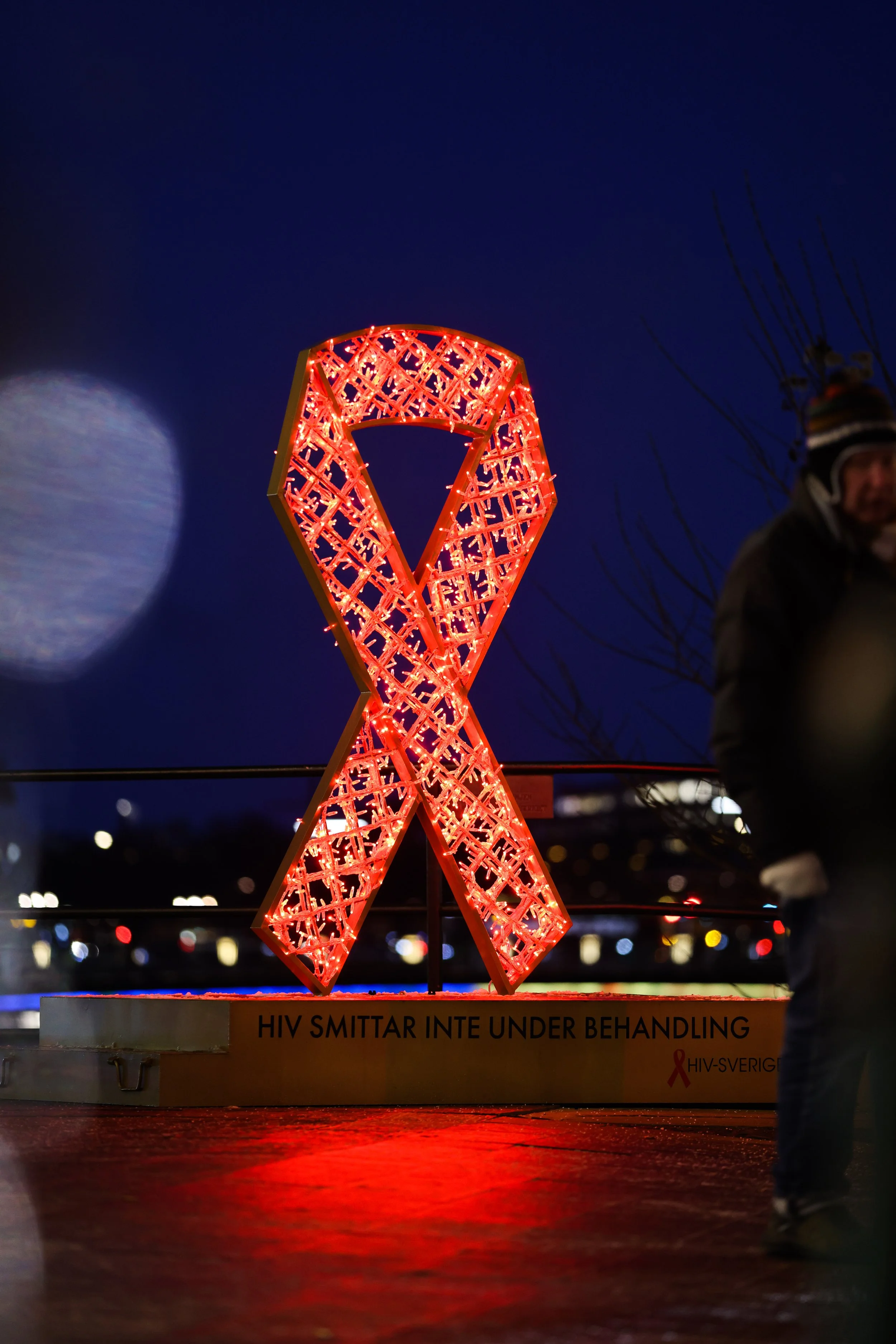
We need you - join the board of HIV-Sweden!
It is now time to nominate new people for the board of HIV-Sweden. We are looking for people who want to work with the board and staff to reduce stigma and discrimination against people living with HIV and raise the HIV issue at a strategic level.
You may be living with HIV yourself, have a close relationship with someone living with HIV or work in the field. Apply by March 21, 2024. The annual meeting is on Sunday, April 21, 2024.
We look forward to your nomination! Help us spread the request by sharing this post with friends and acquaintances. HIV-Sweden's member associations are invited to submit proposals and nominate candidates for the Board of HIV-Sweden.
More info on the mission:
We are looking for you who,
Shares the values of HIV-Sweden
Want to drive the association forward and take responsibility
willing and able to devote about 5 hours per month to board work (time spent may vary depending on the board position)
Living with HIV, no requirement, but the majority of those on the board of HIV Sweden must be living with HIV.
It is an advantage if you
Have experience of sitting on a board
Have experience or interest in HIV
Have experience or want to learn more about association work.
The posts that can be applied for/nominated are,
Treasurer
Board member
Replacements
Remuneration is given in the form of an honorarium. Amounts vary depending on meeting attendance, assignment and post.
You are welcome to send suggestions for candidates to
Christina Franzén, convener of the Nomination Committee.