

A conversation by the sea - living with HIV
It was a sunny day in November when I met Grace in Tylösand. She was visiting to participate in an activity for people living with HIV and we took the opportunity to talk over lunch. With a broad smile, she radiates presence as we sit opposite each other at the Hotel Tylösand restaurant overlooking the bay of Laholm. Grace has a background in finance and came to Sweden to further her education in international trade at one of Sweden's most prestigious programs. But when she tested positive for HIV after a 9-month-long care carousel, her life took a new turn. During our meeting, she talks about life with HIV, loneliness, stigma and how she wishes she had found out about her diagnosis earlier.
"I was very, very scared."
At home in Tanzania there is a lot of talk about HIV, in the workplace, on TV and there are several church and other initiatives to raise awareness about HIV. Although Grace was sexually active, the stigma surrounding HIV was too great for her to take the step to learn more. She knew how HIV is transmitted, but did not want her sexual activities to be associated with HIV because of stigma and fear.
When she arrived in Sweden in June 2022, her goal was to get a master's degree to continue working in finance. But a persistent problem in her lower abdomen led Grace to visit a medical center:
"When I arrived, I had some gynaecological issues, but it wasn't serious and it started already back home. I never saw any doctor, so I guess when I got here my immune system was getting lower and the problem was getting more prominent so I decided to see a doctor at a primary care facility." explains Grace.
The doctor at the health center did not suspect HIV, but referred Grace to a gynecologist at a major university hospital for further investigation. The gynecologist discovered malignant cell changes that a person with a normally functioning immune system would not normally experience. After the examination, the gynecologist suggested that Grace should take an HIV test.
"I freaked out so bad and was against the idea. I did not have any education about it and I was very, very scared." Grace says emphatically, while shaking her head slightly.
The gynecologist explained in detail the importance of getting tested and the risks of not getting tested. Despite her fears, Grace agreed to take an HIV test and was promised that the results would be ready by the beginning of the next week.
"I went home that Friday and I could not sleep for two days, I just read and read"
On Monday, Grace received the news that she had tested positive for HIV, 9 months after initially seeking treatment for pelvic pain.
"Emotionally I was in a very bad condition and they provided me with a therapist and all kinds of things"
Although Grace was shocked by the news, it was the fear of transmitting HIV to others that weighed most heavily.
Sweden offers health examinations for asylum seekers and quota refugees, among others, but far from all those who are offered the opportunity undergo the examination. Several regions, including Stockholm, Västra Götaland and Skåne, have had a coverage rate that has long been below 50%, which means that less than half actually complete the health examination (Hälsoundersökningar för asylsökande och nyanlända- vägen fram, SLL, 2017). Students, workers, relatives and other groups migrating to Sweden are often not offered any health examination at all, something that Grace herself requests:
"They should test either at the border or when submitting an application, but this is not to prohibit or hinder, or jeopardize the entry, no, but it is to know. Like if I came here to Sweden and slept with someone, I could have transmitted hiv to someone. But if I would have known my status before coming, that would not have happened."
In the meeting, it is clear that Grace is relieved that she did not transmit HIV to anyone else, but also horrified that the risk was there when she did not know she was carrying HIV herself. The thought that it could have taken longer for her HIV to be detected makes her think. We both take a few bites of lunch and pause the conversation for a moment, then move on to the next part of her story.
The challenge of learning to live with HIV
Grace was quickly put on medication and has quickly learned to understand HIV and how the medication works. Her family has a history of diabetes, and a significant weight gain made Grace wonder if this was a 'back to health' reaction, a term that describes the body's recovery, which is often associated with some weight gain. In Grace's case, the weight gain was close to 20 kilograms, causing her to worry about the risk of developing diabetes. Together with her doctor, they keep track of her treatment and have an action plan to change her medication if necessary, but it is the social aspect that has been most affected by the HIV diagnosis.
"I was a very happy person, networking and meeting new people, but after the diagnosis things changed and I have become sort of a new person. That had a lot of negative impact on my well being, and I have been taken to the emergency psychiatric hospital several times."
She goes on to explain that meeting others has helped a lot, especially talking and socializing with people living with HIV who have a bright outlook on the future. Through a contact at the infection clinic, Grace was introduced to the Positive Group West, meetings that Grace describes as "amazing, with smart and healthy people". The community has changed her perspective on life for the better, and she wishes there had been someone living with HIV in the hospital to connect with when she was diagnosed.
Stigma contributes to silence
"My main concern is it feels lonely, I feel lonely." says Grace when asked about the challenges she feels today and sees ahead. She believes that HIV is not talked about enough in society. Family and friends' views on HIV are still inadequate and the stigma surrounding HIV is perceived as large and sometimes insurmountable. Her own image of HIV from Tanzania is of sick people at the end of their lives, which creates even more stigma and fear around HIV. "Few people who live normal healthy lives are open about their HIV," she continues. As a final message, Grace says that education about HIV and stigma should be high on everyone's agenda.
"Focal point should be to educate and end the stigma. That should be the focal point. If we get rid of stigma then we can talk more about it."
I thank Grace for sharing her experiences with me. We get up, put on our coats and walk to the parking lot to head home separately.
Emanuel Karlström for HIV-Sweden
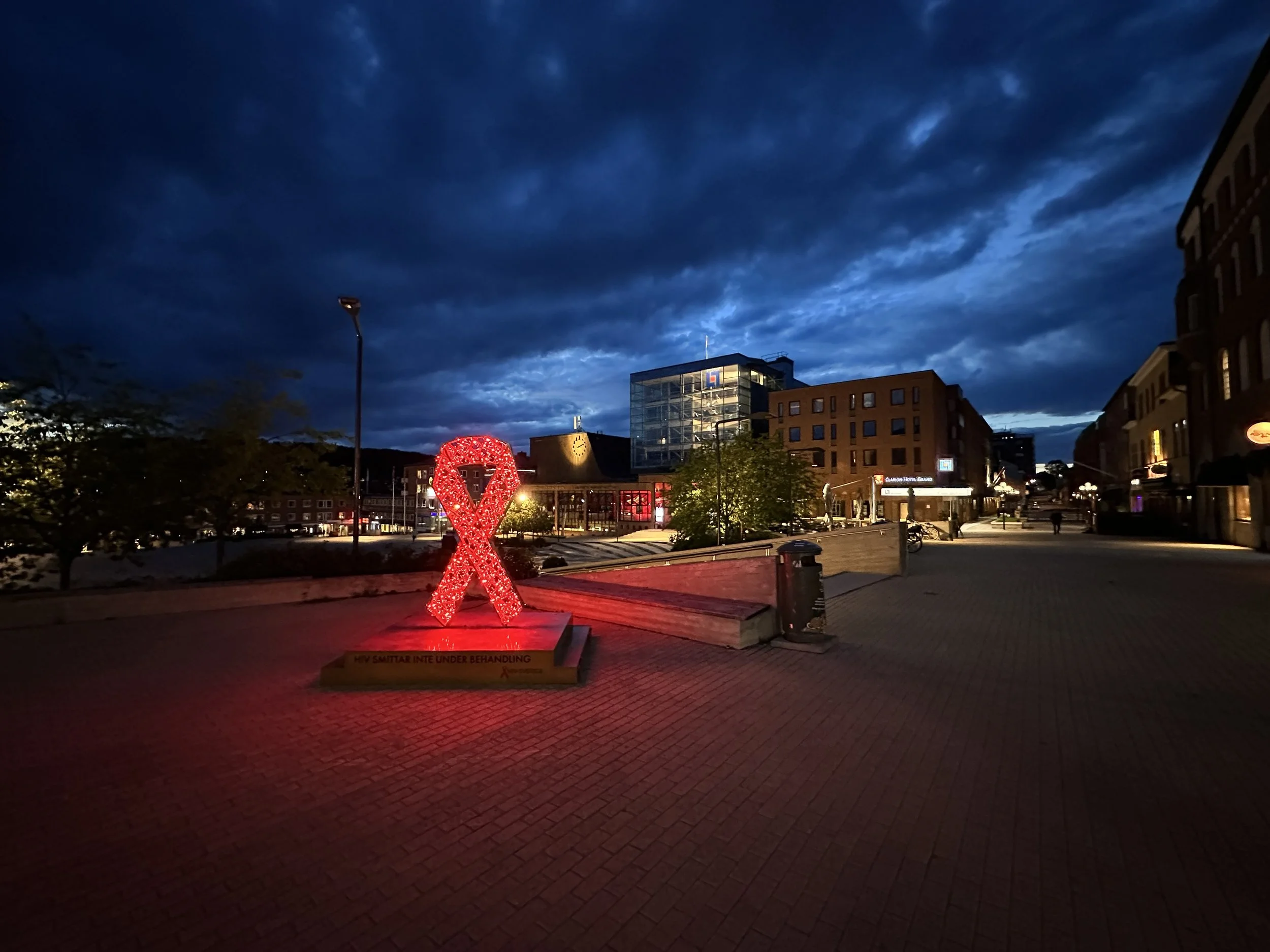
World AIDS Day 2023: HIV Sweden makes HIV and living with HIV visible across the country
The light installation at Stortorget in Östersund earlier this year
On December 1, it is once again time to mark World AIDS Day. On this occasion, HIV Sweden is organizing a series of engaging activities to break the stigma and spread knowledge about HIV in society.
In Borås, Skövde, Växjö and Malmö, lectures will be arranged to highlight the perspective of living with HIV. In central Gothenburg, a light installation will be displayed at Körsbärsträdgården to make HIV visible and to mark World AIDS Day. The light symbolizes hope and support for people living with and affected by HIV. By lighting up the city, HIV-Sweden wants to create a strong visual reminder of the importance of community and to fight prejudice and discrimination around HIV. To reach the whole country, a commercial will also be shown on TV4.
This year's World AIDS Day theme, 'Let communities lead', highlights the importance of involving communities affected by HIV in the response to HIV and AIDS.
- By involving people living with HIV, for example, we can develop care and create policies that better respond to future needs and conditions. More circular thinking is needed. This applies both to the work with HIV in Sweden and globally," says Eva Lilja, Chair of HIV Sweden.
HIV-Sweden encourages the public to participate in the activities and to spread knowledge about HIV and World AIDS Day. By showing solidarity and support, together we can change attitudes and create a more inclusive world for people living with HIV.
For more information and an overview of all activities, see our Calendar.
Sleep quality, concealment of positive status and more - Five news from the European AIDS Conference in Warsaw
Between 18 and 21 October, the European AIDS Conference was held in Warsaw, Poland. The conference was the 19th in order and HIV-Sweden monitored the event by participating digitally. A number of studies were announced during the conference, here we have picked out five news that we think are worth highlighting a little extra.
1. An enhanced role for pharmacists?
In 2022, the government commissioned TLV (Dental and Pharmaceutical Benefits Agency) to develop pharmaceutical services. Pharmaceutical services refer to advice on the use of medicines by pharmacists in outpatient pharmacies. In reality, it means that pharmacists have an expanded role and become a more active part of the patient's care.
In the UK, similar initiatives are underway to broaden the role of pharmacists. As part of a study from Chelsea and Westminster Hospital in London, a pharmacist was employed in a clinic for people living with HIV. The pharmacist's role was broad and included consultation, referral, ordering tests, vaccination, switching HIV medication and prescribing. During the year of the study, the pharmacists, called Advanced Pharmacist Practitioners, saw 498 patients with HIV. Of these 498, 18 completed a survey, which revealed that 72% felt that the pharmacist exceeded their expectations. All were also positive about seeing a pharmacist at their next visit. The study concluded that pharmacists are an important component of the future of HIV care. People living with HIV are getting older, and with age comes an increase in polypharmacy (use of multiple drugs). With their knowledge of how multiple medicines work with each other, pharmacists can be key to meeting the growing need for drug knowledge.
2. Neurocognitive symptoms often go undetected
HAND (HIV associated cognitive disorder) is an umbrella term for different types of cognitive impairment that can affect people living with HIV. The impairment can manifest as asymptomatic or mild functional impairment, to more severe disease states. Examples of symptomatic HAND include dementia or impaired motor skills.
In a new study from Belgium, a research team found out how common HAND is among people living with HIV. By distributing a three-question questionnaire, they surveyed 548 patients over the course of a year. The three questions were;
Do you experience frequent memory loss?
Do you feel that you are slower when reasoning, planning activities or solving problems?
Do you have difficulties paying attention?
Of the 548 patients, 45% answered yes to any of the questions and 14% of all patients answered yes to all three questions. Among those who answered yes, the treating physician was only aware of the neurocognitive problems in less than half. Some of the patients in the study went on to investigate the causes and associations of their symptoms, finding associations with feelings of shame, support from loved ones, sleep quality, and physical and mental health.
3. Concealment of positive status linked to negative effects
Some people living with HIV are completely open about their status, others tell only a few or no one at all. The reasons for not telling can be individual, social and cultural.
In a study from France, researchers addressed the questions: How common is it to conceal one's positive HIV status? What are the effects on people living with HIV?
In the study, doctors handed out questionnaires, which patients filled in themselves. A total of 539 people with HIV participated in the study, of which 355 lived with one or more people in a shared household. Of the 355, 87 had not told anyone else in the household about their positive status. A large majority, 84% of those who did not tell others about their HIV at home, hid their medication in a discreet place known only to themselves. In addition to hiding medication, they felt tired of treatment and experienced problems taking medication regularly. The researchers urge healthcare professionals to discuss HIV, infectiousness in treatment and openness, to support people living with HIV to live more openly with their status.
4. Chronic inflammation behind sleep difficulties in people living with HIV?
Poorer sleep quality and difficulty sleeping have been observed in the past among people living with HIV. During the conference, two studies, one from Greece and one from Turkey, were presented on the topic of sleep. The study from Greece involved 154 participants and the study from Turkey 131 participants. Both studies used the Pittsburgh Sleep Quality Index and the Epworth Sleepiness Scale, which are used to report and measure sleep quality and potential sleep difficulties.
The results of the Greek study showed that 55% suffered from insomnia and 25% from restless legs syndrome/Willis Ekbom disease. The study also showed that about half of the respondents suffered from depression and anxiety. In the Turkish study, nearly 60% suffered from poor sleep quality and the proportion with depression and daytime sleepiness was significantly higher among those suffering from poor sleep quality.
The results of the two studies suggest that the immune system may play a role in relation to sleep quality and sleep difficulties. The Turkish study highlighted that the speed of CD4 cell recovery matters, with faster and stronger recovery being more common in those with poorer sleep quality. This can be related to the Greek study where the CD4/CD8 balance was worse in people who experienced sleep difficulties. A normal balance is at least 1 CD4 cell for every CD8 cell, however, in people living with HIV an imbalance between these cell types is relatively common, which can affect sleep according to these studies.
5. In case of conflict or war - experience from Ukraine in maintaining care and treatment
In recent years, several conflicts have flared up around the world. Health services and their staff are generally not trained to work in an ongoing conflict. Maintaining care and treatment under stressful circumstances therefore requires both planning and preparedness. The AIDS Healthcare Foundation (AHF) has worked in conflict zones and in areas where the security situation is uncertain. A new study provides new insights into the lessons they have learned from the war in Ukraine, identifying staff training, cybersecurity, communication and basic supplies for health workers, as well as medicines and equipment, as critical to maintaining a functioning health system. The AHF recommends a contingency plan that prepares healthcare workers to take care of themselves and their families in order to provide care.
With information gathering and knowledge of the security situation, the contingency plan can be updated and kept up to date, to create the best possible conditions in case of crisis or war. In February 2023, the AHF, together with the Ukrainian government, provided treatment and care to 65 689 people living with HIV, of which 95% were on antiretroviral treatment and 90% had an undetectable viral load.
1 Role of the Advanced Pharmacist Practitioner (APP), Boffito et al, NHS Foundation Trust.
2) Screening for neurocognitive impairment in people living with HIV (PLHIV) through patient-reported outcomes (PROMS) and cognitive assessment, de Scheerder et al, Ghent University Hospital, General Interal Medicine.
3 Impact of hiding HIV positive status on PLWH treatment with ART: results from the French national survey CONCERTO, Palich et al.
4.a. Sleep disorders and Inflammation Biomarkers in People Living with HIV (PLHIV) monitored in a tertiary University Hospital of Greece, Panagopoulos et al.
4.b. Prevalence of and Factors Associated With Poor Quality of Sleep in People Living With HIV and Investigating the Relationship Between Sleep Quality and CD4+ T Lymphocyte: Cross-Sectional Study From Turkey, Korkmaz et al., University Ataturk Training and Research Hospital
5. Supporting the mission of caring for patients during military conflicts:lessons from Ukraine, Avelino-Silva et al, AIDS Healthcare Foundation
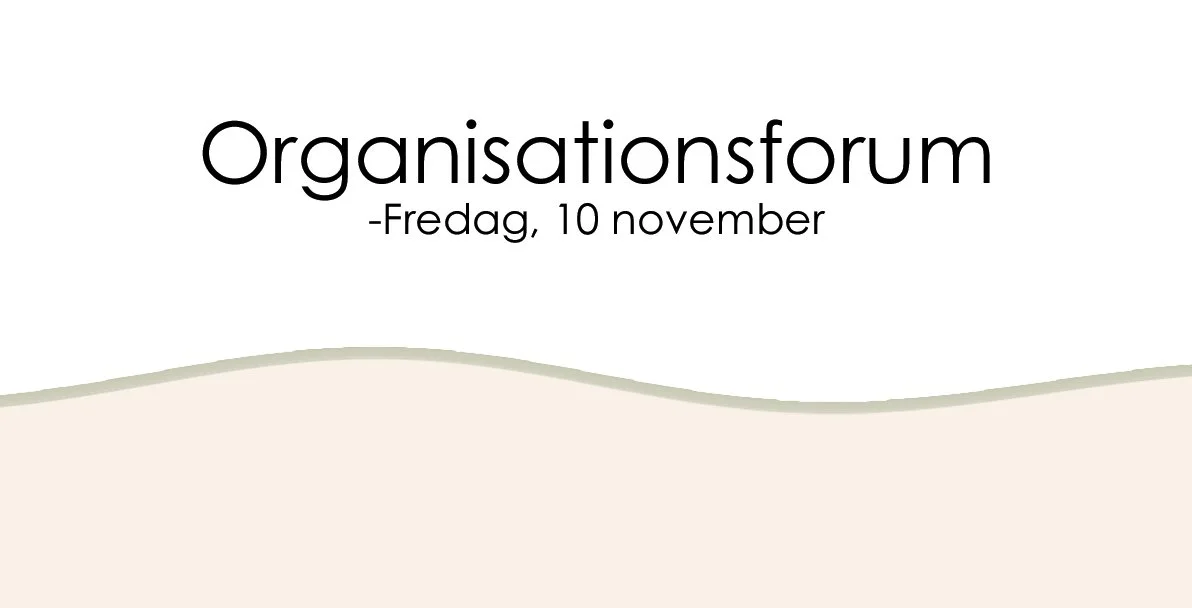
HIV-Sweden hosts organizational forum in Stockholm
Participate, influence and meet others! Make your voice heard in the fight against HIV in Sweden.
On 10 November, HIV-Sweden is organizing the Organizational Forum, a meeting for all members of HIV-Sweden who want to help shape the content and direction of the organization. The day will include workshops, presentations and discussions.
For more information and registration, please contact info@hiv-sverige.se
A warm welcome!
Time and place: Friday, November 10, 09:00 - 15:00 at Hiv-Sweden's premises, Industrigatan 6, Stockholm.

HIV-Sweden attends HIV-Nordic seminar in Oslo
HIV-Sweden will participate when HIV Norway hosts a Nordic conference on the theme of knowledge and research in relation to HIV on September 1 in Oslo. The conference is co-organized by the Nordic association HIV-Nordic, which includes HIV-Sweden, HivNorge, Hiv-Denmark, HivFinland/Positiiviset and Hiv-Iceland.
The conference provides a Nordic perspective on surveys, reports and knowledge bases in the Nordic countries. After the presentations, a panel will discuss the importance of new knowledge and how it can be used to create change.
The event will be held in central Oslo and is open to all. Register your participation by August 28, click here to access the registration form.
Time: September 1, 14:00 - 16:00
Location: Rosenkrantz' gate 4, Oslo (HivNorge)